Pages

Thursday, 10 November 2016

Retro Aluminum Design Cameras

Leica is a brand that is associated with the yesteryear of photography, but the Leica TL compact mirrorless camera aims to bring the brand up to speed with current demands. The Leica TL comes in three color options and features a 16.3MP CMOS sensor, a touchscreen LCD monitor and delivers exceptional usage with every charge of the battery (around 400 shots). The Leica TL is compatible with TL and SL lenses as well as the Leica M and R lenses when used with an optional lens adapter.

Previous cameras from Leica were devoid of screens and other modern features, and the growing demand for the brand to answer calls for more features has not gone unheard. The new Leica TL compact mirrorless camera is set to be available soon for purchase at a price of $1,695.


Source: Retro Aluminum Design Cameras

Wednesday, 9 November 2016

Review: Sigma SD Quattro Mirrorless Camera

Sigma has always made some very interesting cameras that in many ways felt like they shot themselves in the foot, and something like the Sigma sD Quattro I believed to really fix a lot of the problems of previous cameras. To start, the camera offers two models: an APS-C model and one that moves away from APS-C sensors and went to APS-H–a dead standard that Canon used to include with some of their 1D series cameras. The sensor has a 1.3x crop factor and so is larger than typical APS-C sensors. It still uses a Foveon sensor, which in the hands of a skilled editor can produce some absolutely flawless results.

And unfortunately, the autofocus is still stuck in the early 2000s.

Pros and Cons

chris-gampat-the-phoblographer-sigma-sd-quattro-review-product-images-9-of-9iso-2001-60-sec-at-f-2-0

Pros
  • Great image quality below ISO 1600
  • Significantly improved high ISO image quality
  • Solid feeling body, perhaps the most solid feeling mirrorless camera I've held
  • Pretty simple menu system
  • Removable IR filter
  • Cons
  • Slowest autofocus in the industry of any modern camera
  • Nine autofocus points. Nine!
  • Battery life is better than previous models but still pretty awful
  • Writing to an SD card is still pretty slow
  • Sigma Photo Pro (the only software that will edit the RAWs) is the slowest, most abysmal thing to work with.
  • The software ends up downsizing images the higher you go up in the ISO output.
  • Gear Used

    The Sigma sD Quattro was reviewed with the Sigma 30mm f1.4 Art and the Adorama Flashpoint Zoom Li-On flash system.

    Tech Specs

    You'll be best served heading over to Sigma's website to check out the tech specs.

    Ergonomics

    chris-gampat-the-phoblographer-sigma-sd-quattro-review-product-images-3-of-9iso-2001-125-sec-at-f-2-8

    The Sigma sD Quattro camera is one that in some ways is really unconventional. When you look at the front of the camera, you see the grip, the release button, the mount and little else. What you don't see here though is that the IR filter is removable.

    chris-gampat-the-phoblographer-sigma-sd-quattro-review-product-images-4-of-9iso-2001-125-sec-at-f-2-0

    Looking at the package from the top, you'll spot something really weird about this camera overall. the mount juts out a lot and isn't flush in the same way that most mirrorless cameras are. That's because this is a Sigma mount camera.

    On the top of the camera you'll find the on/off siwtch, the hot shoe, the exposure dials, the on/off switch, etc. What I really like here is the diopter for the EVF: which pops up, turns for you and then pops back down to lock into place.

    Again, all this is pretty different from what you may be used to.

    chris-gampat-the-phoblographer-sigma-sd-quattro-review-product-images-5-of-9iso-2001-125-sec-at-f-2-0

    The back of the camera has a large LCD screen, buttons that control parameters like the ISO, playback, directional controls, autofocus point selection, etc. The LCD screen is also split. The left side, which is clearly visible from the right, displays certain info. The right displays other info constantly that corresponds to the buttons on the right of it.

    Also notice the viewfinder placement. Clearly, this is a camera for right eyed shooters–which I am. but if you're a left eye shooter, you'll find it kind of awkward.

    Build Quality

    chris-gampat-the-phoblographer-sigma-sd-quattro-review-product-images-2-of-9iso-2001-125-sec-at-f-2-8

    The Sigma sD Quattro camera isn't weather sealed–let's get that straight right off the bat. But it's extremely well built. If you've ever held a Leica SL, you know that it feels like you can hammer nails with it. You'll get the same feeling here. It's very well built overall. Despite the odd design, it also feels good in the hand. However, I think it would feel even better in my hands if my hands were bigger. So if you're a person with large paws, then it will work well for you.

    Ease of Use

    chris-gampat-the-phoblographer-sigma-sd-quattro-review-product-images-7-of-9iso-2001-60-sec-at-f-2-0

    If you dedicate the time to spend maybe around a half hour with the camera, explore it and go through the menus carefully you'll see just how simple this camera is to use overall. Everything that you need is right at your fingertips generally and you almost never need to go into the menus.

    chris-gampat-the-phoblographer-sigma-sd-quattro-review-product-images-8-of-9iso-2001-60-sec-at-f-2-0

    With that said though, the menu system isn't difficult to work with at all. It's very Leica-like actually. Things are straight forward and all it takes is just you spending a bit more time with the camera to figure out what you need to do.

    Autofocus

    Ugh!!!

    The Sigma sD Quattro has nine autofocus points that honestly feel like an antiquated DSLR's in some ways. In fact, it's almost like working with the old Canon 5D Mk II's autofocus except that the Canon's AF was faster. The sD Quattro's autofocus is extremely slow overall. Point and shoot cameras are faster and even your phone is capable of faster focusing.

    Unfortunately, this has been a flaw with Sigma's cameras for years now and still hasn't been fixed.

    In good lighting, it's slower than all the rest out there. In low lighting, you'll sit there for a couple of seconds hoping to get the photo in focus. The more constrasty the area is, the faster it will focus.

    Image Quality

    chris-gampat-the-phoblographer-sigma-sd-quattro-review-jpegs-11-of-13iso-4001-60-sec-at-f-2-8

    The Foveon sensor inside of Sigma's cameras have always been the strong point. They're very capable of getting lots of detail, fantastic colors (in the hands of a skilled editor and someone who understands color balance in-camera) and just a genuinely nice feel overall. This is still the case, but there's one really big problem: it's 2016. Camera manufacturers (namely Fujifilm) have caught up. The X Trans Sensor is capable of producing better colors when running images through Capture One Pro. Additionally, the Sony a7r II and the Canon 5Ds are also cameras with incredibly capable sensors. In many ways, Foveon is kind of useless at this point.

    JPEG Output

    chris-gampat-the-phoblographer-sigma-sd-quattro-review-jpegs-1-of-13iso-4001-400-sec-at-f-1-4

    JPEGs from the camera have a unique, almost film-like look to them. Imagine something from Agfa a while back and you'll have the looks that this camera can produce most of the time. Are they the best JPEGS? Not by a long shot. Fujifilm and Olympus produce far better alternatives.

    To be fair, I wouldn't spend my money on this camera to shoot the JPEGs.

    RAW File Versatility

    chris-gampat-the-phoblographer-sigma-sd-quattro-review-jpegs-12-of-13iso-4001-60-sec-at-f-2-8

    Above is a photo that I shot using a flash camera left. Below is my edit.

    _sdi0024

    To be honest here, I'm not really a fan of this image. It's very tough for my to tell the difference between the color shades on the left. This wouldn't be the issue I feel with other cameras and snesors.

    High ISO Output

    chris-gampat-the-phoblographer-sigma-sd-quattro-review-jpegs-3-of-13iso-64001-800-sec-at-f-1-4

    So here's where Sigma deserves a lot of praise and critique. The above image is at 6400 ISO. It's the JPEG.

    _sdi0006

    Bring it into the Sigma software, nerf the noise, and then set the software to export an image at "half size" and it will seriously shrink the image. At ISO 6400 and considering that it's 2016 with so much imaging technology, this is unacceptable.

    chris-gampat-the-phoblographer-sigma-sd-quattro-review-jpegs-6-of-13iso-16001-80-sec-at-f-1-4

    At ISO 1600 it's more acceptable. The above photo is the JPEG while the below photo is a minor RAW edit.

    _sdi0011

    To be honest, below 1600 is usable. Above that, not so much.

    chris-gampat-the-phoblographer-sigma-sd-quattro-review-jpegs-4-of-13iso-32001-250-sec-at-f-1-4

    chris-gampat-the-phoblographer-sigma-sd-quattro-review-jpegs-5-of-13iso-16001-80-sec-at-f-1-4

    Extra Image Samples

    chris-gampat-the-phoblographer-sigma-sd-quattro-review-jpegs-10-of-13iso-4001-40-sec-at-f-1-4

    chris-gampat-the-phoblographer-sigma-sd-quattro-review-jpegs-9-of-13iso-4001-40-sec-at-f-1-4

    chris-gampat-the-phoblographer-sigma-sd-quattro-review-jpegs-8-of-13iso-4001-40-sec-at-f-1-4

    chris-gampat-the-phoblographer-sigma-sd-quattro-review-jpegs-7-of-13iso-8001-80-sec-at-f-1-4

    chris-gampat-the-phoblographer-sigma-sd-quattro-review-jpegs-2-of-13iso-1001-160-sec-at-f-5-6

    _sdi0027

    Conclusions Likes
  • Low ISO image quality
  • Great feeling camera body
  • Menu systems are easy
  • Dislikes
  • Why isn't it weather sealed?
  • Why is the autofocus so slow?
  • Why hasn't the software improved when it comes to editing the images?
  • Honestly, why is Sigma still making cameras?
  • I love Sigma: years ago I made a switch from all Canon glass to Sigma glass. I own some of their lenses for the Micro Four Thirds system. I also own their converter to put Canon EF mount Sigma lenses onto Sony E mount bodies. They all work wonderfully. But if you notice the going trend in those past few sentences, you'll see that it skews heavily towards optics. Even there, they're starting to fall a bit behind to Tamron and Zeiss (the former who now incorporates full weather sealing in their lenses for a more affordable price point.) Overall though, I don't think a single reviewer will sit there and say that Sigma makes bad lenses. They make bloody fantastic optics.

    For the life of me though, I can't figure out or understand why they're still in the camera market. The company keeps producing camera after camera with the same issues over and over again. The high ISO output gets better but the autofocus doesn't. The battery life doesn't really improve. And they keep trying new things, which is honestly very admirable in a world where everything really feels the same. But I think that it's time that Sigma truthfully puts the nail in the coffin for their cameras. I'm not going to use a point and shoot with a 75mm equivalent lens in the studio. I'm not going to use the sD Quattro in the studio either because the files are so incredibly tough to work with and I abhor Sigma's software for them.

    This becomes even more confusing in a world with so much fantastic camera competition overall. Canon, Nikon, Sony, Fujifilm, Olympus, Panasonic, Leica and Pentax all make freakin' fantastic cameras. They all fill niches that everyone wants to work in. Why does Sigma continue to make cameras? Let alone, I'm not sure who would purchase one. Maybe landscape photographers: but then why spend so much money when Canon, Nikon, Sony and all the rest offer such incredible options and have better third party support?

    I had incredible high hopes for this camera; but I honestly just feel let down, betrayed and perplexed. Their point and shoots weren't bad, but I still wouldn't buy one because there are still better cameras out there.

    Two star Phoblographer Star rating

    I'm giving this camera two out of five stars. I'm positive that there's a competing blog that's going to say that the camera is freakin' incredible due to a sponsorship right now. But as always, I've encouraged a culture of writers speaking their hearts and minds.


    Source: Review: Sigma SD Quattro Mirrorless Camera

    Tuesday, 8 November 2016

    The Yi M1 is a gorgeous mirrorless camera at a rock-bottom price

    Before I get into this review, I want to get one thing straight. I am not a photographer.

    I didn't study photography at school. I haven't done any classes. I don't have a side-gig shooting weddings and bar mitzvahs. I have a relatively decent Nikon DSLR which I primarily use for product review photos and travel snaps. I still use the kit lens. As far as my camera usage is concerned, I'm an Average Joe. Much like, I assume, you.

    New York, meet the world's tech scene

    5,000 Tech leaders are coming to NYC this November to learn and do business. This is your chance to join them.

    There's an entire market of people who want to take great photographs, and need something with a bit more power than a point-and-shoot or smartphone. This market has traditionally been served by Nikon and Canon's entry-level DSLR cameras, as well as offerings by Panasonic and Sony. And now there's a new contender from Chinese manufacturer Yi, called the Yi M1.

    A brave (and cheap) new hope

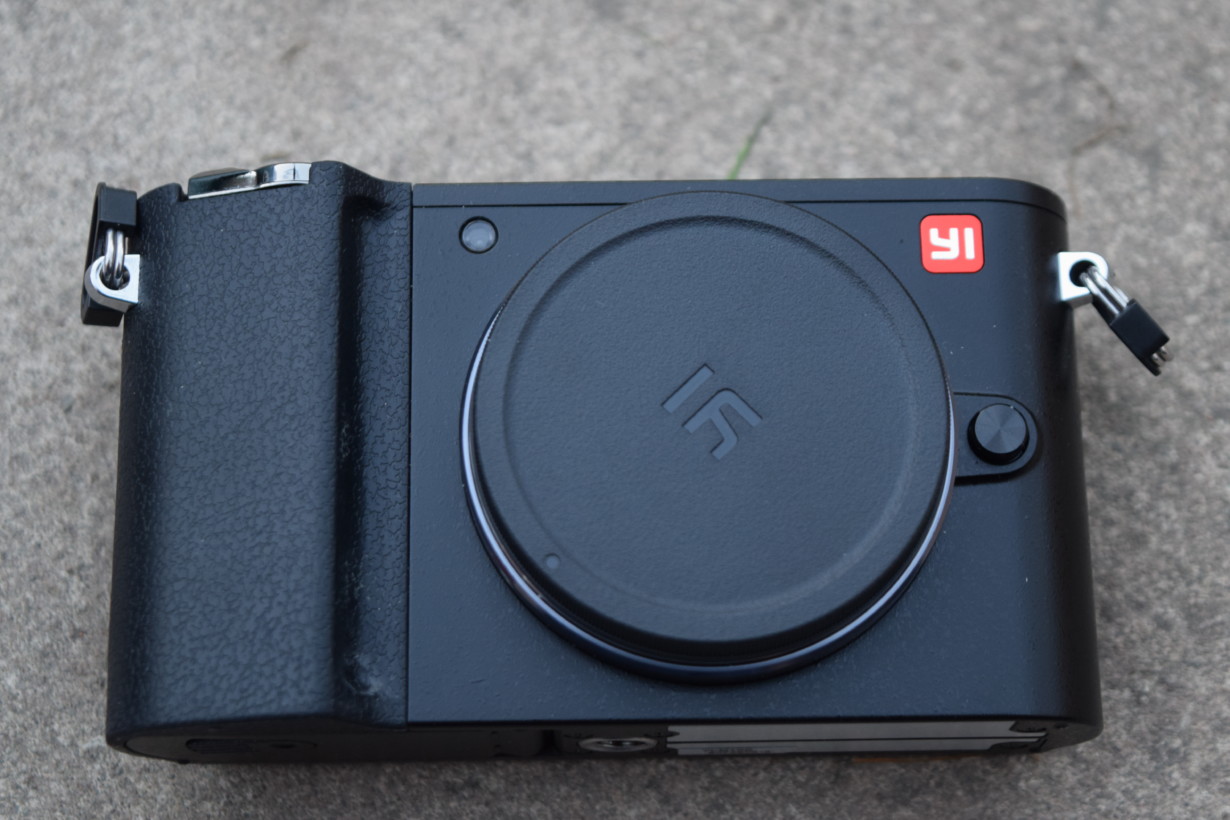
    Here's what's so remarkable about the Yi M1 mirrorless camera. It's so god-damned cheap. In China, you can get the camera body, plus a 12-40mm zoom lens with an F/2.5-5.6 aperture for about $330.

    front

    No, that wasn't a typo. $330. That's how much this costs.

    The same model in the United States costs $499. That's a bit of a leap, admittedly, but it's pretty reasonable when you consider that there's import duties and transportation costs.

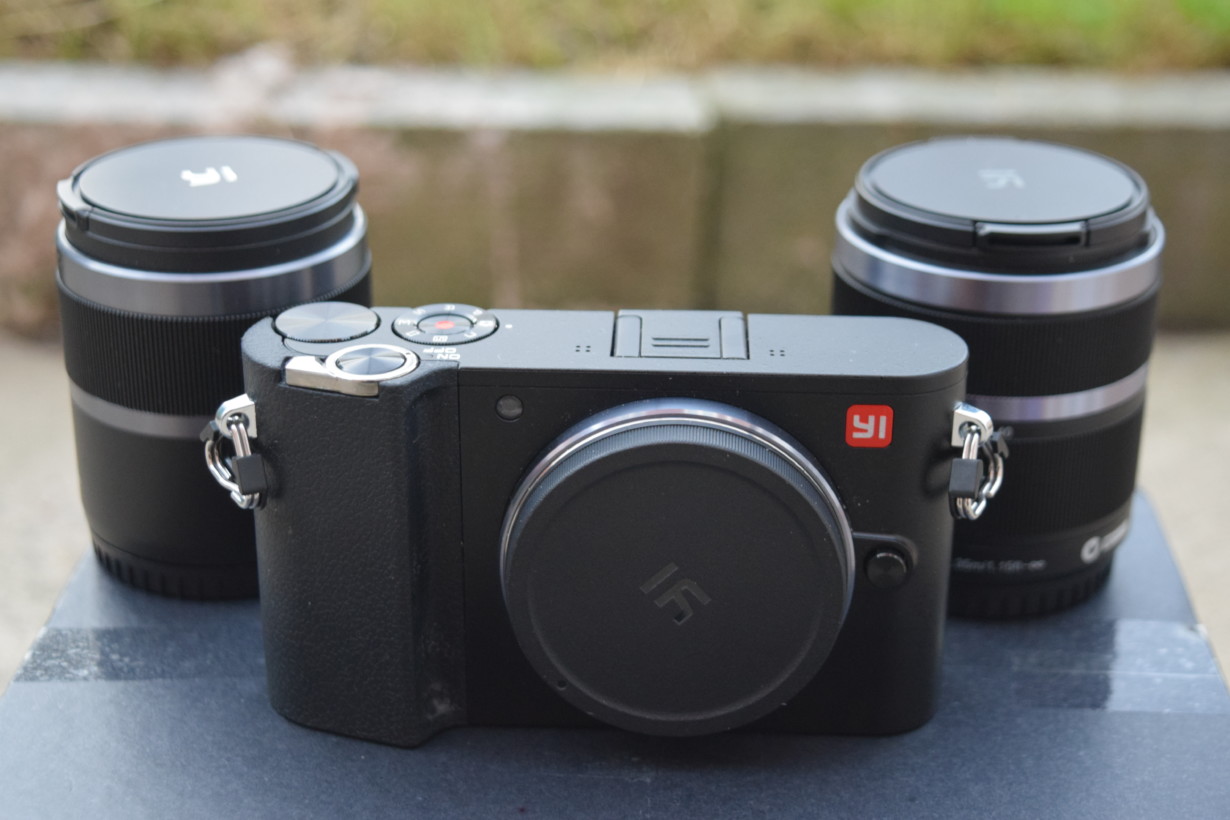
    You can also get a model with an additional 42.5mm fixed lens with an F/1.8 aperture for an extra $200 on Amazon. This is the model which I will be reviewing.

    allcomponents

    So, let's recap. One camera. Two lenses. $699. OMG.

    But this only really matters if the camera itself is actually any good. And well? I most certainly like to think it is.

    Hands on with the Yi M1

    I've been playing with the Yi M1 for a while now. My review loaner model shipped from China a few weeks before it launched in the United States. During this time, I've studied it's weaknesses and it's strengths. Fortunately, there's more of the latter than the former.

    First, let's see what the camera body can do. It boasts the following specifications:

  • 20 MegaPixel IMAX269 sensor
  • 4K/30FPS video recording
  • ISO range from 100 to 25600
  • Face detection with support for up to 32 faces
  • Built-in Wi-Fi 802.11n
  • Bluetooth LE
  • MicroHDMI
  • SDXC support
  • 3″ LCD touchscreen viewfinder
  • Removable rechargeable battery
  • MicroUSB charging
  • Impressive. But these only tell part of the story. To get the full picture (no pun intended), you've got to use it.

    At first, I was pretty skeptical. After all, $330 is not a lot of money to spend on a mirrorless camera. You could be forgiven for assuming that corners would have been cut somewhere. But that just wasn't the case.

    Let's start by looking at build quality. This thing is built like a brick house. I mean it's sturdy as hell. When in the hand, it feels strong and rugged. You can toss it in a backpack without worrying that it'll emerge all scuffed and scratched.

    It's also worth pointing out that it's a pretty handsome looking camera, too. As The Verge pointed out, it takes more than a little bit of design inspiration from the (admittedly gorgeous) Leica T.

    Then you switch it on. At first, I was worried. No matter how good the hardware is on paper, software can make or break a tech product. If the Yi M1 felt clunky, or slow and unresponsive, the entire device would have been a write-off.

    Thankfully, it excelled here. I'm not sure what CPU powers this thing, or how much RAM it has. But when using it, I was able to switch between modes, load settings and previously taken photographs in an instant. It felt fast, and extremely fluid.

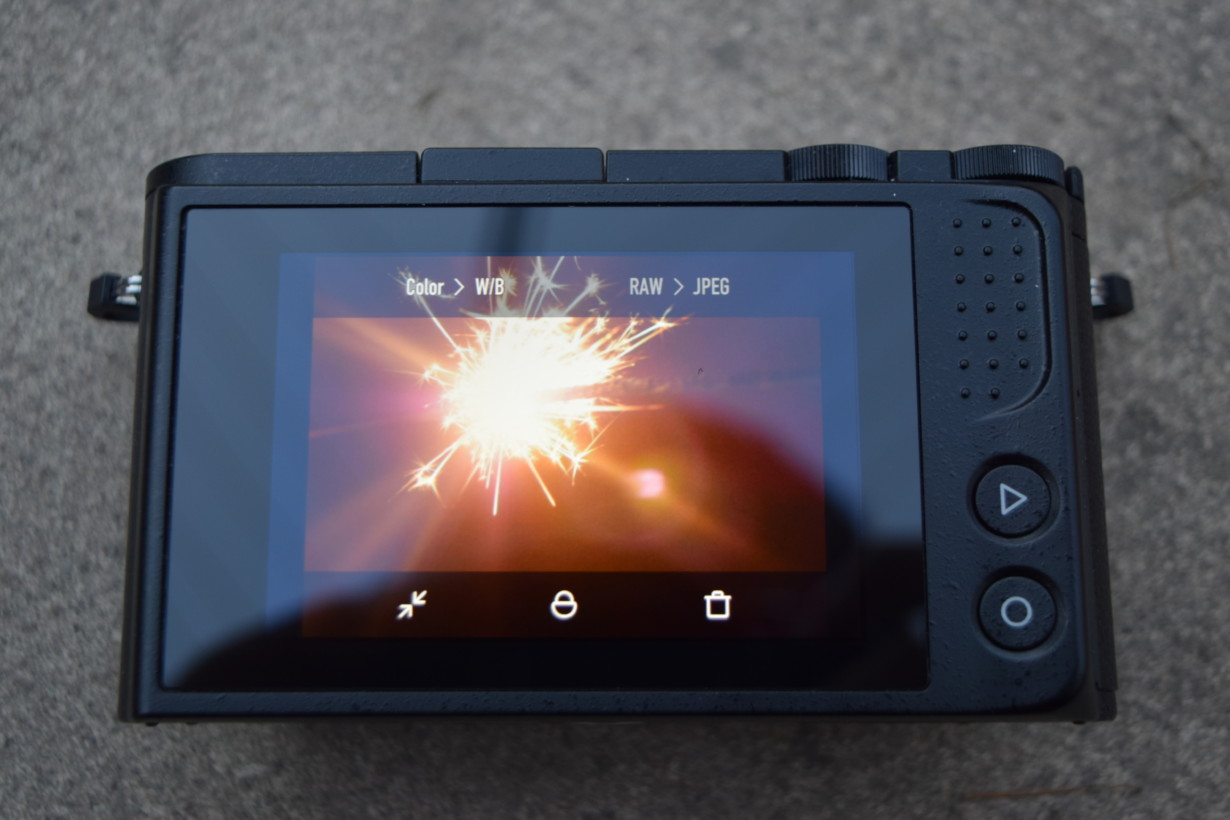
    Front-and-center of the camera is a gorgeous 3-inch touchscreen. I found this to be invaluable. If I wanted to zoom in on a particular part of the frame, I just had to tap where it is on the screen. To access the camera's settings, I just had to swipe right.

    screen

    It reduces each task you could possibly want to do, like connect to a Wi-Fi network or adjust the white balance, to just a series of taps.

    Here I must make a confession. Since the review unit shipped to me came from China, its firmware was only available in Chinese. As a result, many of the settings weren't explored as thoroughly as they would have been if I had received a US model.

    But even this wasn't much of an issue. Most settings were accompanied with easily-decipherable pictograms. It was just the occasional error message that stumped me.

    Out and about with the Yi M1

    Considering the low price, it's hard to argue with the Yi M1 as a day-to-day camera. It gets the job done. Shots are taken quickly and precisely, provided that there's sufficient illumination. It's easy to use, and it travels well.

    My biggest complaint with the Yi M1 is that it really struggles at nighttime. Photographs taken under the cover of darkness were blurry and lacked definition. In virtually every respect here, it performed worse than my fiancee's iPhone 5S. Don't think that this is a camera to drag around on a night out. You'll be disappointed.

    Similarly, last Saturday was Guy Fawkes Day (also known as Bonfire Night) in the UK. It's our equivalent of the Fourth of July, and everyone uses it as an opportunity to let off some fireworks. Unfortunately, I was unable to get a single decent shot of one exploding in the air. They just looked like vague flecks of light on a black, starless background.

    That said, I was able to squeeze some half-decent shots taken at a closer range. These were of sparklers and a bonfire respectively.

    It's also worth pointing out that the Yi M1 lacks a built-in flash. If you want this, you'll have to buy it separately and add it via the Hot Shoe.

    The Yi M1 also lacks a built-in viewfinder. To be fair, very few mirrorless cameras offer this due to the fact that they're… Well… Mirrorless. The ones that do tend to be on the more expensive end of the spectrum, and offer it digitally.

    Given that this camera is being sold in China for $330, I'm not about to quibble with this. The Yi M1 offers amazing value at an unbeatable price. But as someone who has become used to lining up shots with the viewfinder on my Nikon D3300, I found it a bit awkward to use the LCD.

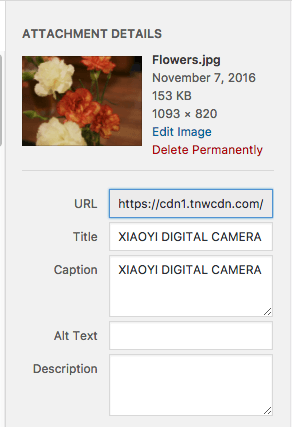
    I have one final, specific complaint about the Yi M1. For whatever reason, it automatically gives each photograph a title and caption of "XIAOYI DIGITAL CAMERA".

    xiaoyidigitalcamera

    For most people, this isn't an issue. But if you want to share them on WordPress, you'll find that you have to remove this from each photo. Otherwise, it is displayed on the page.

    It's a small complaint, and like I said, it won't be an issue for most people. However, fixing its mess was more than a little tedious.

    Who should buy the Yi M1?

    I am not a photographer. But as someone with pretty ordinary camera needs, the Yi M1 is a pretty satisfactory piece of kit. It's well built. It takes decent daytime shots. It has a bunch of extra features that you'll love, like built-in Wi-Fi and MicroHDMI.

    In short, it ticks most boxes you'd want ticked in a camera.

    The Yi M1 isn't going to satisfy photography pros. But that's fine, because it's not for them.

    It's for people who are just getting into photography, and want an affordable camera that offers them the features of more expensive cameras. It's for people who want a camera for their travels. A camera that is lightweight but strong, and can be thrown in a bag. It's for people who want to an affordable device to shoot 4K video.

    If you line your expectations up with the Yi M1, you won't be disappointed.

    Read next: Study: You'll spend 1.3 years of your life finding something to watch on TV


    Source: The Yi M1 is a gorgeous mirrorless camera at a rock-bottom price

    Monday, 7 November 2016

    More Leica TL pictures leaked online

    leica-tl-mirrorless-camera-3 leica-tl-mirrorless-camera-4leica-tl-mirrorless-camera-2A few more pictures of the upcoming Leica TL mirrorless camera leaked online. I was told that the new model will not have any major/significant upgrades or any new technology/features from the previous Leica T (Typ 701) version, hence the same form factor. The TL will have a new/updated firmware (probably related to the previously rumored 1.6 firmware update). The built-in memory of the new model will be 32GB (vs. 16GB in the previous version). The new TL will be available in three different colors: black anodized, silver anodized and titanium color (not made from titanium).

    leica-tl-mirrorless-camera-1

    leica-tl-mirrorless-camera-5

    Via Digicame-info


    Source: More Leica TL pictures leaked online

    Saturday, 5 November 2016

    Leica TL Mirrorless Camera Leaked Image, Leica M10 Registered in China

    The first image of the Leica TL mirrorless camera got leaked online. The Leica TL is the new name of the Leica T system.

    The new Leica TL will be available in three different colors: black anodized, silver anodized and titanium. And it is expected to be announced sonn!

    And the Leica M10 camera has been registered at Chinese Ministry of Industry and Information Technology. This Leica M10 should be the the direct replacement of the "classic" M9 (or Leica M Typ xxx)

    Leica M10

  • CMIIT ID: 2016DJ6597
  • Issue Date: October 24, 2016
  • 2.4GHz Wi-Fi equipped
  • Via: Nokishita

    Reminder: We are getting ready for the Black Friday camera deals and Cyber Monday camera deals this November: 2016 Black Friday Camera Deals, Cyber Monday Camera Deals 2016.

    Related posts:

  • Sony "WW158299″ Camera Registered in China, Sony a9 or a7III Coming?
  • Leica M (Typ 262) Camera Registered in Russia and South Korea
  • Leica T Typ 701 Announcement, Image, Specs & Price Leaked
  • Leica SL (Typ 601) Camera Leaked Specs: 24MP Sensor, AF, 4K Video
  • First Image of Leica SL (Typ 601) Camera?

  • Source: Leica TL Mirrorless Camera Leaked Image, Leica M10 Registered in China

    Friday, 4 November 2016

    Fujifilm thinks you need a mirrorless interchangeable lens camera for selfies

    161103-fujifilm-x-a3-hands-on-malaysia-01

    Fujifilm Malaysia just launched their latest Fujifim X-A3 mirrorless camera that they say is designed for the selfie generation. It comes with several features designed to help you take the perfect selfie.

    The question I have is: Do you really need a mirrorless APS-C camera with interchangeable lenses to capture selfies?

    161103-fujifilm-x-a3-hands-on-malaysia-09

    Fujifilm's X-A3 is the company's updated entry-level Fujifilm X series camera. It comes with a 24-megapixel APS-C sensor with a traditional Bayer colour filter as opposed to Fuji's X-Trans. Speaking to a Fujifilm spokesperson, he informed me that this was a necessary sacrifice to keep the price of the camera low. It'll also shoot Full HD 1080p video at 60fps and has WiFi connectivity.

    161103-fujifilm-x-a3-hands-on-malaysia-02

    But that's not the only sacrifice they had to make. Most Fujifilm cameras are well known for their solid construction (usually out of a magnesium alloy, like my beloved X100S), which feels great in the hand. On the X-A3, however, you will immediately be able to tell why Fujifilm says it's "entry-level".

    161103-fujifilm-x-a3-hands-on-malaysia-06

    Although I was told that the top frame is made out of magnesium alloy too, the rest of the camera feels absolutely sub-par and plasticky. Perhaps I'm judging Fuji's baby camera more harshly than I normally would because of how good their other cameras feel, but I was definitely not impressed with the X-A3's construction at all.

    161103-fujifilm-x-a3-hands-on-malaysia-08

    Besides that, the X-A3 has a 3″ 1040k-dot TFT LCD flip-out touch-sensitive display. With this display, you can tap different areas on the screen to have the screen focus, or, in full-auto, have it immediately focus and capture a photo. This gives the camera a very smartphone-y feel to it which isn't necessarily a bad thing.

    161103-fujifilm-x-a3-hands-on-malaysia-07

    It doesn't have a viewfinder, which is unfortunate, but the X-A3 at least retains the sexy metal dials people love on Fujifilm's cameras. That said, the dials don't let you change shutter speed, exposure compensation or ISO. The bigger dial is used to switch between modes, while the other can adjust stuff like shutter speed and aperture.

    161103-fujifilm-x-a3-hands-on-malaysia-05

    The overall shooting experience with the X-A3 is still very satisfying. The shutter button has a nice click to it and lends to the retro good looks that Fujifilm pushes on all their X series cameras. Unfortunately, this particular button isn't threaded so you can't screw soft shutter releases or cable releases into it.

    161103-fujifilm-x-a3-hands-on-malaysia-04

    Focusing seems to still be typical Fujifilm (which is to say not very fast), but you also get access to Fujifilm's  since it has Fujifilm's X-Mount, you have a variety of lenses to choose from. If you wanna go big, you can also pick from their pro-level red-badge XF lenses.

    161103-fujifilm-x-a3-hands-on-malaysia-10

    For the nitty gritty details and camera specs, you can head on over to Fujifilm's website.

    To me, I don't actually think that it will significantly change how people take selfies. Considering how good smartphone selfie cameras have got, and how much more convenient it is to carry your smartphone with you, the masses will probably stick to the 5MP-8MP selfie shooter that's always in their pocket.

    161103-fujifilm-x-a3-hands-on-malaysia-12

    That being said, the X-A3 does keep things real when you think of it as a small, good-looking point and shoot. One strong advantage it has is the fact that you can slap on better glass as time goes on to get better images and more versatility thanks to the X mount.

    161103-fujifilm-x-a3-hands-on-malaysia-03

    Still, these are only my first impressions so I won't give my full judgment of the X-A3 without a full review.

    161103-fujifilm-x-a3-hands-on-malaysia-11

    Fujifilm's X-A3 will retail for RM2,888 and comes in three colours: Pink, Silver or Brown. For the price, you're also getting an XC 16-50mm f/3.5-5.6 OIS II lens bundled in. If you're interested, you can head on over to Fujifilm Malaysia's first (and brand new) Wonder Photo Shop that's located in Sunway Pyramid's Orange Atrium.

    What do you guys think of this camera? Let me know in the comments below.

    Related

    Cameras, Fujifilm camera, FujiFilm, Fujifilm Malaysia, Fujifilm X-A3, Fujifilm X-A3 hands on, Fujifilm X-A3 hands on malaysia, Fujifilm X-A3 Malaysia launch, Fujifilm X-A3 official malaysia, Fujinon, interchangeable lens camera, mirrorless, Retro, retro camera, X Mount lenses
    Source: Fujifilm thinks you need a mirrorless interchangeable lens camera for selfies

    Thursday, 3 November 2016

    Olympus’ flagship mirrorless camera gets UK release and price

    Olympus has announced that the flagship OM-D E-M1 Mark II is coming to the UK – albeit with a hefty price tag attached.

    The professional-grade mirrorless camera will set snappers back a hefty £1,849.99 for the body only. There's also a bundle that pairs the camera with an M.Zuiko Digital Ed 12-40mm 1:2.8 Pro lens for a loftier £2,399.99. But with self-described "wish list" specs, this Olympus camera is sure to be popular.

    For a start, you get a 20.4-megapixel Live MOS sensor with TruePic VIII image processing. There's also a 120fps electronic viewfinder and a 3-inch Vari-angle LCD touch-panel on the back.

    olympus

    The camera is capable of video recording, shooting Full HD footage at up to 60fps. You'll also be able to shoot in two different 4K modes, with the follow frame rates:

  • 3,840 x 2,160 pixels at 30fps
  • 4,096 x 2,160 pixels at 24fps
  • The Olympus OM-D E-M1 Mark II also features 5-axis image stabilisation, ISO that ranges from 'low' to 25,600, and 121-point All Cross-type autofocus. Then there's the silent shutter mode, which will suit nature photographers who don't want to scare off their subjects with an ill-timed click.

    olympus

    Perhaps the only other key feature of note is that the camera has two SD card slots, so you should find it very difficult to run out of space.

    You'll be able to pick up the camera in the UK from December at "key photographic retailers".

    Related: CES 2017

    Watch The Refresh: The best tech gossip and reviews every week

    What do you think of Olympus' new camera? Let us know in the comments.


    Source: Olympus' flagship mirrorless camera gets UK release and price