Pages

Sunday, 3 September 2017

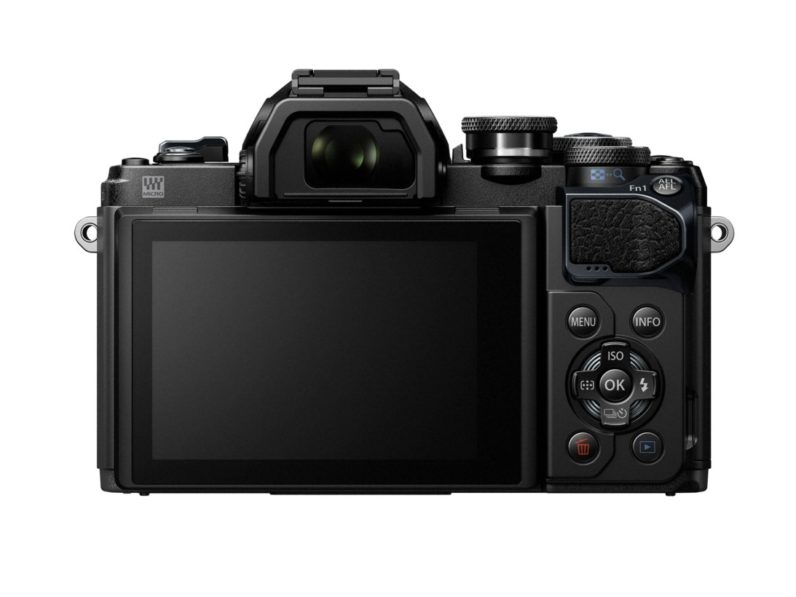
Olympus’ E-M10 Mark III adds 4K to one of the best cameras for beginners

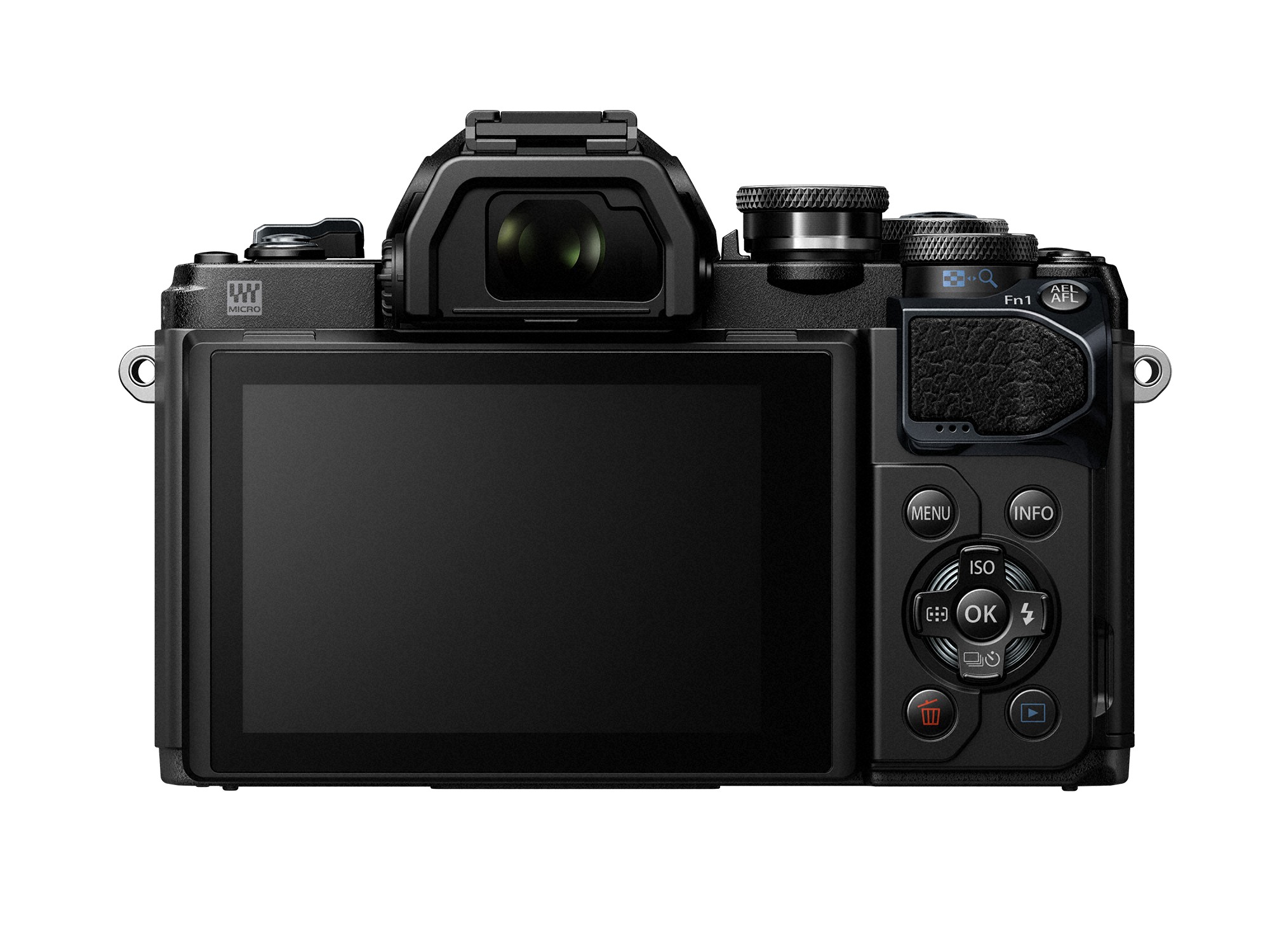
Olympus' OM-D series has long been one of the most popular choices among mirrorless enthusiasts, combining compact design with retro aesthetics, speedy performance, and excellent image stabilization. Now Olympus is bringing some of the best features from its premier camera to its newest entry level camera, the E-M10 Mark III.

The biggest change this time around is the addition of 4K video recording – because it's 2017 – and improved video stabilization. The previous model offered 3-axis stabilization for video; the MKIII does 5-axis. If you don't know what that means, it's basically silky smooth video on the move.

Given the E-M10 series is aimed at people making their first entry into interchangeable lens cameras, the MKIII also adds four shooting assists modes. As per Olympus' description:

When in AUTO Mode, the camera detects the shooting scene, subject, lighting, and movement of the camera and subject to automatically select the optimal settings to allow anyone to capture blur-free, pin-sharp photos, even in dimly lit indoor situations. In Scene Mode, users can touch one of six shooting environments, each displayed on the LCD monitor, to activate the ideal settings. The Advanced Photo Mode opens up users of all levels to popular photography techniques, such as nighttime Live Composite and Multiple Exposure. Bleach Bypass is a new filter in Art Filter Mode that reproduces the silver retention method used when developing film. Type I produces a glossy look, like shining silver metal, and Type II produces a nostalgic look reminiscent of old film.

Marketing speak aside, the idea is to help simplify settings for noob photographers. They can play with auto or scene modes, while dabbling with more advanced techniques like long exposures, without as much of a learning curve.

That said, more advanced photographers will appreciate practical changes like a chunkier grip and raised dials for easier control access in between shots, and a neat shortcut button to quickly access specific settings. I'm also glad Olympus now defaults to using the rear directional pad for changing settings like ISO and white balance, while still letting you easily adjust your focus point if you wish.

Otherwise, it's largely the same as its predecessor. You can shoot at 8.6 FPS, the 16MP sensor is a solid performer, and the in-body image stabilization is a godsend for video shooting static subjects in low light. The sensor may be smaller than some of the competition, but unless you're shooting action in low light, I've found Olympus' image stabilization usually compensates for it.

If you already have an E-M10 MKII, there's little reason to upgrade, and it doesn't come cheap at $650 for the body  only ($800 with the kit lens). Still, Olympus is presenting a unique combination of design, speed, portability and image quality that's hard to find. Considering Olympus is part of the most robust lens ecosystem among mirrorless cameras, the MKIII could be a worthwhile consideration for someone wetting their toes with more advanced photography.

Read next: Amazon sued for selling dodgy eclipse glasses


Source: Olympus' E-M10 Mark III adds 4K to one of the best cameras for beginners

Saturday, 2 September 2017

Catching up on the latest Nikon patents (more mirrorless hints)

I have not reported on the latest Nikon patents in a while, here is a quick recap (a reminder: as some have found out recently, previous patents are not a guarantee for future products):

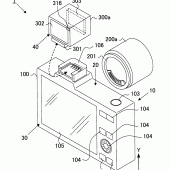
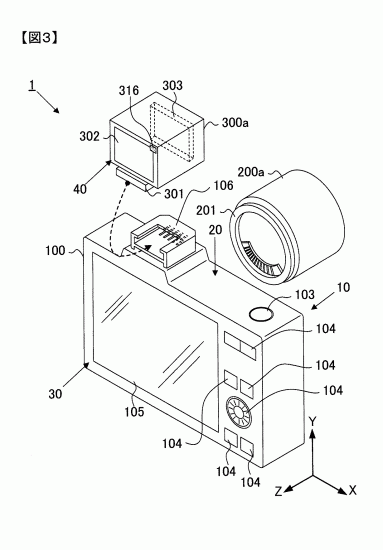
Nikon has a patent application (direct link) for a multi-accessory port which has a noise-resistant pin and can be used for attaching an EVF to a mirrorless camera (see also this related patent).

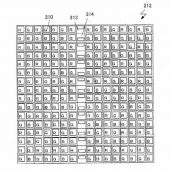
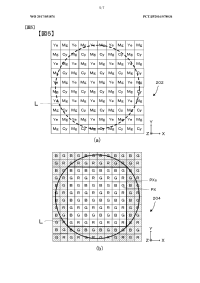
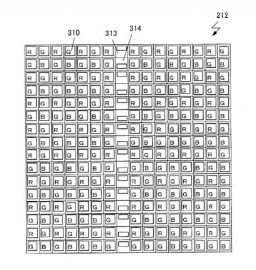
Nikon PDAF sensor patent with global shutter and HDR mode.

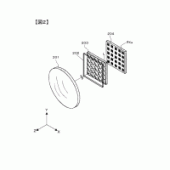
Nikon dual layer light field sensor patent.

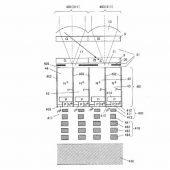
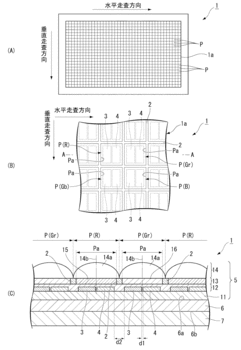
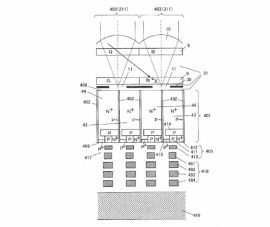
Nikon patent for BSI CMOS sensor with Dual Pixel AF on-sensor focusing system (see also this related patent).

Nikon patent for making PF lenses without the (or with a reduced) halo effect PF/DO lenses usually make.

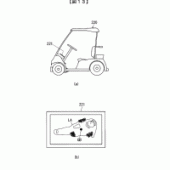
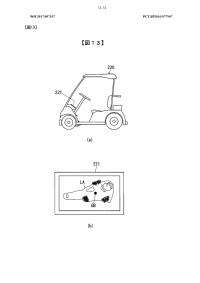
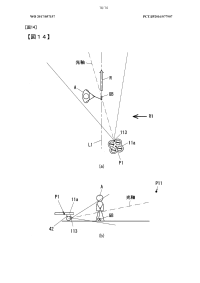
Nikon patent for special drone designed for golfers

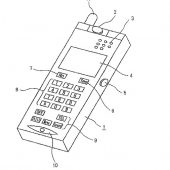
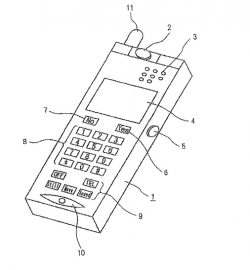
Nikon patent for a camera that can switch between communication mode and shooting mode (Snapbridge related maybe?)

"A camera having communication ability can switch a mode between a communication mode and a shooting mode. The camera combines features of a communication device and a digital camera. The camera comprises a communication device, an imaging device, and a switching device. The switching device switched the communication mode to the shooting mode responsive to completion of communication."

Like the new Nikon Mirrorless Camera Facebook page and join the growing Nikon Mirrorless Camera Facebook group for a more detailed coverage of the upcoming Nikon mirrorless camera.


Source: Catching up on the latest Nikon patents (more mirrorless hints)

Friday, 1 September 2017

Canon's budget mirrorless M100 gets a big sensor upgrade

Canon's M5 and other mirrorless cameras don't get the respect of Fujifilm or Sony models, perhaps because of the blah style and lack of features like 4K that users have come to expect. However, it's gradually improved the lineup and managed to increase mirrorless sales by 70 percent this year. To attract those who want to step up from smartphones, Canon has launched the M100, a replacement for the budget M10. The standout feature is a new 24.2-megapixel sensor that provides a big resolution improvement over the previous model's 18 megapixels.

© Provided by Engadget

Though the M100 lives at the bottom of its mirrorless lineup, the sensor is now the same as the one used on the high-end M5 and M6. Along with an updated Digic 7 processor, it allows up to 6.1 fps shooting and a 100-25,600 ISO range, decent specs for a relatively small and cheap mirrorless model. It also packs Canon's Dual Pixel focus system, which improves autofocus speed whether you're shooting stills or video. Video, is limited to 1080p, unfortunately, but at least you can shoot at 60 fps.

Other features helpful for the selfie set include a 3.0-inch, 180-degree tiltable touchscreen, HDR backlight control for tricky lighting and WiFi, Bluetooth and NFC for smartphone sharing or remote shooting. The touchscreen can be used for menu selection as well as touch focus for video. The Creative Assistant can help beginners blur out backgrounds or make a scene brighter.

The M100 is not aimed at serious photographers, but rather newbies that want to step into interchangeable lens photography with some style. Though it comes in just two colors (silver and black), there are nine optional jackets varying from red-yellow to navy-gold. The EOS M100 starts at $600 with a 15-45 mm f/3.5-6.3 lens, and runs $950 if you add a 55-22mm f/4.5-6.3 lens. If you've already got some Canon EF lenses, you can pick up the EF-M mount adapter for $200. It arrives in October, 2017.


Source: Canon's budget mirrorless M100 gets a big sensor upgrade

Thursday, 31 August 2017

Olympus gives its entry-level mirrorless camera a 4K upgrade

Olympus is pitching this to folks looking to move up from a smartphone, a common marketing tactic for budget mirrorless or DSLRs these days. As such, it has four shooting assist modes for beginners (auto, scene, advanced photo and art filter).

It's not lacking a lot of features for pros, though, with 200-25,600 ISO, 4.6 fps shooting at the highest quality level (8.6 fps at lower quality), 121-point contrast AF, a 1/16,000th electronic shutter, silent mode and UHS-II card support. It has a built-in flash and 3-inch 1,040K dot touchscreen you can use to focus on specific parts of a scene.

The EM-10 III can shoot 4K video (3,840 x 2,160) at 30p max, with a data rate of 102 Mbps. 60fps is possible at full HD, and 120 fps at 720p. Olympus notes that you can attach a stereo microphone, likely by the $50 SEMA-1 microphone adapter, as the EM-10 III doesn't have a microphone port. Autofocus and image stabilization are supported for movie modes.

As far as drawbacks, the EM-10 III does have a smaller sensor than the M100 and Sony's aging A6000, both in megapixels (16 versus around 24) and size (Micro Four Thirds versus APS-C). Despite the reasonably high ISO, Olympus doesn't have a great reputation for low-light shooting, either, especially compared to Sony. It's also limited to USB 2.0 and lacking Bluetooth and NFC, which is kind of inexcusable if it's trying to tempt the social and selfie set. (Also, OM-D EM-2 Mark III is still a lousy camera name.)

Nevertheless, if were a beginner looking to step up, I'd be mighty tempted by the Olympus OM-D EM-10 III for its 4K video, EVF, 5-axis stabilization and, yes, that pretty body. You can pick one up in late September for $650 (body only) or $800 with an M.Zuiko 14-42mm kit lens.


Source: Olympus gives its entry-level mirrorless camera a 4K upgrade

Wednesday, 30 August 2017

Why I prefer a real camera to a smartphone, and why you should as well.

Why I prefer a real camera to a smartphone, and why you should as well.

By Steve Huff

For the last 2-3 years I have seen more people shooting photos with Smart Phones than ANY other type of camera. For a while, I was OK with it. I mean, the phones can put out a nice image, even using the iPhones fake bokeh mode…oh, wait, "Portrait" mode. Phones are now owned by almost everyone, even small kids. I just saw a 6-year-old wielding an iPhone the other day, using it like a pro. I was like "WHAT?!?!?". Yep, the kids today are starting early and do you realize what that means?

Well, in photo terms, it means that these kids, as they grow and get older will probably not even know what a real camera is (of course many will but many will not). Many will grow up thinking it has always been like this. A mobile device that does it all..calls, texts, internet browsing, apps and games, and yes, taking photos. Cameras in the future may very well consist of only smart devices and the way tech is going, I am sure these sensors will get better, even bigger, and with lenses added via accessories, most will think they have the best camera ever created. Now yes, this is many years in the future… like if you have a one year old now, and never introduced them to a real camera, they would never know what a real camera was by the time they get older. Cameras in 20-30 years may be things of memories for us older folk (in the future), as I can not see them sustaining mass sales for 20-30 more years.

With that said, camera sales today in 2017 are stabilizing and after a 5 year drop in sales, they MAY be leveling off. Five years ago it peaked, and man, so many were buying up cameras like mad. New model after new model…because that was the era of mass and rapid improvement. Tech was evolving, and today it has peaked. As I have mentioned before, all cameras today are wonderful and while phone cameras can deliver good results and a certain very wide DOF look, for me, a phone could never and will never even come close to a real camera. A camera you can hold, control, compose through and even learn to master.

For me, there is no substitute for a real camera. Here, a Sony RX1R shot. 

Another from the incredible, even today, RX1R MK1

I have reviewed, used, tested and fired off almost every 35mm and mirrorless camera made over the last several years. Even quite a few DSLR's even though this website has been focused on mirrorless for so long. I love them all in many ways, and if all of my personal cameras were taken away or had to be sold due to some sort of catastrophe I would be sad. A smartphone, while highly capable of taking a shot, just does not give you the same feeling, the same satisfaction or joy as a real solid camera with dials, buttons and control.

When you take a shot with a real camera and nail it, you feel like you accomplished something. It's an amazing part of why so many love this hobby or even profession. It's a craft, a way of life for many.

But when I see 90% of those out there shooting using phones, it feels like something has been taken away from photography. I will say it again, YES, there are amazing works done with phones and processing techniques but what I am talking about is the feeling one gets from using a real camera as well as the versatility a real camera offers you.

The Leica M 240 and 50 Voigtlander Nokton 1.5

The Leica Monochrom and 35 1.4 Summilux

For example, and this is just one example…using something like a Leica M brings so much pleasure to so many who use them. It's an entirely different way of shooting than from a DSLR or something like a Sony of Fuji. Even using a little Fuji X100 series can be liberating, fun and so enjoyable. Todays younger generation may never know these pleasures or the excitement of heading out to the streets to shoot with a real camera.

Don't get me wrong, I am not saying that EVERYONE today only shoots with a phone. There ARE some young folks today shooting with real digital cameras, specifically the starter Canon DSLR's which are great bang for the buck models. But as a whole, the world has gone to smartphones for a few reasons. One is that it is always with them. While we may slag and leave our cameras behind sometimes, we never ever leave our phones behind, right?

The size that is slim, and just slips in to your front pocket makes the smartphone so convenient.

The ease of use means no one has to learn photography, no one needs to learn even the basics, about aperture or ISO. They just aim and shoot.

Leica SL and 50 Zeiss Sonnar

Ease of sharing. Today's world is super focused on social media, selfies and sharing their photos to Instagram. The smartphone makes it easy with a few clicks.

The quality, while no were near what something like a Fuji, Olympus, Sony or Leica will give you (or any DSLR for that matter) is "good enough" for the ones who enjoy using their phones, and for many this is 100% true. They are good enough. But some ofuI can't tell you how many times people have come up to me when I have been out with a real camera, asking me either "what is that" (in the case of a Leica M) or "you still shoot old cameras", even when carrying something like a Sony A9. Mostly young adults, teenagers, etc. Curious about why I would carry around a large device to snap photos. They often go on to tell me how amazing the quality of their iPhone or whatever phone is (because they never experienced a "real camera".)

All is good, whatever makes them happy but I wish everyone who had an interest for photography would at least try out a nice camera once, to see that there is much more to photography than using a phone. It's not about the gear, that's not what I mean..it is about the feeling, the joy, the pride of ownership..which in turn, motivates you to get out and use it. For me, the phone doesn't do that.

1st Shot Sony RX1R and the 2nd, Leica Monochrom 

If you want a shot like either of the above, with a phone, it is almost impossible if not impossible to create a REAL shallow DOF. Fake DOF and Bokeh do not count, and while they may look pleasing, they also look fake. So I hope that in 20-30 years we will still have cameras being made. With real lenses to choose from, with real buttons to push and dials to turn and with character like only certain lenses can give.

The Canon 50 0.95 "Dream Lens" on the Leica M. Can't do this with your phone folks!

A Monochrom image with the Sony RX1R

As for me, I will grow old using a real camera, I will die owning a real camera and probably that is because that is the way I grew up. I wonder if I were just born today…I wonder what I would use when I turned 13 or 14 for my photos. Would it be a smartphone or some other tech just waiting around the corner? Will camera still be made in 16 years, 20 years? Only time will tell but I will keep pushing the virtues and benefits of real cameras because for me, there is no substitute.

1st Image from the Sony RX1R and the 2nd from the Olympus EM5

What do you think about the phone vs camera debate?

Leave a comment below!


Source: Why I prefer a real camera to a smartphone, and why you should as well.
Tuesday, 29 August 2017

Canon's budget mirrorless M100 gets a big sensor upgrade

Though the M100 lives at the bottom of its mirrorless lineup, the sensor is now the same as the one used on the high-end M5 and M6. Along with an updated Digic 7 processor, it allows up to 6.1 fps shooting and a 100-25,600 ISO range, decent specs for a relatively small and cheap mirrorless model. It also packs Canon's Dual Pixel focus system, which improves autofocus speed whether you're shooting stills or video. Video, is limited to 1080p, unfortunately, but at least you can shoot at 60 fps.

Other features helpful for the selfie set include a 3.0-inch, 180-degree tiltable touchscreen, HDR backlight control for tricky lighting and WiFi, Bluetooth and NFC for smartphone sharing or remote shooting. The touchscreen can be used for menu selection as well as touch focus for video. The Creative Assistant can help beginners blur out backgrounds or make a scene brighter.

The M100 is not aimed at serious photographers, but rather newbies that want to step into interchangeable lens photography with some style. Though it comes in just two colors (silver and black), there are nine optional jackets varying from red-yellow to navy-gold. The EOS M100 starts at $600/£570 with a 15-45 mm f/3.5-6.3 lens, and runs $950/£770 if you add a 55-200mm f/4.5-6.3 lens. If you've already got some Canon EF lenses, you can pick up the EF-M mount adapter for $200/around £100. The M100 arrives in October, 2017.


Source: Canon's budget mirrorless M100 gets a big sensor upgrade

Saturday, 26 August 2017

8 best mirrorless cameras 2017 for mirror-free picture taking

Courtesy of T3: T3 image © Courtesy of T3 T3 image If you're looking for a new camera you've come to the right place, because we have collected the very best mirrorless cameras here.

We think the ultimate mirrorless camera you can get is the Olympus PEN-F,  combining design cues from Olympus' classic half-frame film cameras with seriously up-to-date technology. 

But before we dive right in to our best mirrorless camera list, let's have a look at what to look out for in a new camera...

How to choose a mirrorless camera that's right for you

First, what actually are mirrorless cameras, or compact system cameras (CSC, for short)? They're an alternative to bulky DSLRs, which still allow you to change the lens and enjoy the benefits of a large sensor.

Compact system cameras come in three main styles: beginners' basics, DSLR-replacements, and retro revivals.

Basic models don't have viewfinders but they do come with everything else you need, including interchangeable lenses and full manual-exposure controls so that you can develop your camera skills later. DSLR replacements are like slimmed-down versions of real DSLRs; the only difference is that you get an electronic viewfinder rather than the optical sort. Retro revivals hark back to an earlier era of classic rangefinder-style cameras with rectangular bodies, viewfinders in the corner rather than on top, and smartly finished external controls.

With their market still expanding, mirrorless cameras have come on a lot in the past year. The latest must-haves include 4K-video capture with the ability to extract an 8 megapixel still. Increasingly, we also get flip-up screens to satiate the selfie shooter, and Wi-Fi and NFC connectivity to share shots with smartphone or tablet.

What hasn't changed much is sensor size, however. Offerings are still split between – in ascending order of physical size – one inch, Four Thirds (of an inch), APS-C, and Full Frame sensors. The rule of thumb is that physically larger sensors are capable of taking better the pictures.

The 8 best mirrorless cameras you can buy today

Here we've listed all of the best compact system cameras you can buy right now!

© Provided by Future Publishing Ltd.

1. Olympus PEN-F

Olympus is unashamedly targeting the style-conscious with the PEN-F, which combines design cues from its classic half-frame film cameras with seriously up-to-date technology. It looks beautiful and packs a brand new 20MP sensor, exquisite external controls, and an excellent EVF.

© Provided by Future Publishing Ltd.

2. Fujifilm X-Pro2

The X-Pro2 is a chunky, classic rangefinder-style camera with a unique hybrid optical/electronic viewfinder. It takes the same X-mount lenses as the X-A2 and X-T10, but throws in a brand-new and super-sharp 24MP X-Trans sensor. It's unlike any DSLR, and it's absolutely brilliant.

© Provided by Future Publishing Ltd.

3. Panasonic Lumix DMC-GF7

This tiny beginner orientated system camera packs the large Four Thirds sensor and Venus engine as found in the numerically similar GX7 premium model. Panasonic has bowed to the 'selfie' craze here, by including a 180-degree tilting monitor, along with two new self-portrait enabling features in Face Shutter and Buddy Shutter. It also has a new Wi-Fi button, and lightning quick autofocus response, in conjunction with supplied 12-32mm lens. The GF7 feels like Panasonic is making even its entry level CSC's into serious contenders.

© Provided by Future Publishing Ltd.

4. Nikon 1 J5

The Nikon 1 has the smallest sensor, but the image quality is still good and it's the smallest and most pocketable of them all. It comes with high-speed tech that enables 20fps continuous stills shooting, and it also has a tilting touchscreen display.

© Provided by Future Publishing Ltd.

5. Fujifilm X-A2

Fujifilms's cheapest X-mount camera doesn't come with its top X-Trans sensor or a viewfinder, but the regular 16MP APS-C CMOS sensor is still a good performer, and the X-A2 delivers style and control that belie its budget price tag. It also comes in black and silver, but we love this tan version.

© Provided by Future Publishing Ltd.

6. Panasonic Lumix DMC-GH4

Panasonic's GH4 is renowned for its professional-grade video quality - making it a top choice for videographers around the world. It'll record in resolutions up to 4K at 30 fps, with the ability to grab 8-megapixel stills from a frame of video, in-camera. Broadening its appeal the GH4 also offers both Wi-Fi and NFC, an OLED viewfinder, great image quality, and weather proofing. This is a very adept all rounder.

© Provided by Future Publishing Ltd.

7. Canon EOS M3

Being the biggest camera manufacturer on the planet you'd expect Canon's CSC offering to be pretty competent. This miniature EOS has a large 24MP APS-C sensor, and excellent flexible touchscreen that tilts upwards by 180° and down by 45°. Keeping with the times there's Wi-Fi and NFC.

© Provided by Future Publishing Ltd.

8. Olympus OM-D E-M5 Mark II

The Olympus OM-D E-M5 Mark II may be the perfect enthusiast camera. The body is fully weather resistant, and the Mark II also introduces a new shutter mechanism, a swivelling touchscreen, and a new 40-megapixel high-resolution shot mode. Carried over is the amazing five-axis in-body stabilisation, and the amazing line-up of Micro Four Thirds lenses. All of that, in the gorgeous body which strikes a perfect balance between retro and modern.


Source: 8 best mirrorless cameras 2017 for mirror-free picture taking